Spacex Nasa Roman Space Telescope Launch 2026 on SpaceX Falcon Heavy to Explore the Dark Universe USA

Spacex Nasa Roman Space Telescope Launch

Spacex Nasa Roman Space Telescope Launch on SpaceX Falcon Heavy to Explore Dark Universe

United States news: NASA’s Nancy Grace Roman Space Telescope has successfully launched aboard a SpaceX Falcon Heavy rocket, beginning a three-month journey toward its final orbit around the second Sun-Earth Lagrange point, known as L2. The powerful launch took place at 7:26 a.m. EDT on Sunday, August 30, 2026, from Launch Complex 39A at NASA’s Kennedy Space Center in Florida.

The mission marks a major milestone for NASA’s next-generation space science program. Roman is designed to provide astronomers with an unprecedented combination of a wide field of view and high-resolution infrared vision, allowing scientists to investigate some of the biggest mysteries in the universe.

Spacex Nasa Roman Space Telescope Launch Nancy Grace Roman Space Telescope Begins Million-Mile Journey-Following liftoff, NASA’s ground control team at the Goddard Space Flight Center in Greenbelt, Maryland, began receiving telemetry from the spacecraft approximately seven minutes after launch.

The Falcon Heavy rocket performed as planned, with the spacecraft separating from the launch vehicle around 31 minutes into the flight. The rocket’s reusable boosters subsequently returned safely to the launch area for refurbishment. Roman is now heading toward L2, located approximately one million miles from Earth. This location will provide the telescope with a stable environment for observing deep space and conducting large-scale astronomical surveys.

NASA said the Deep Space Network took over communications about 70 minutes after launch. Communications will be maintained through NASA facilities in Canberra, Madrid, and Goldstone during the spacecraft’s journey.

Roman Telescope Will Study Dark Matter and Dark Energy, Spacex Nasa Roman Space Telescope Launch-One of the primary objectives of the Nancy Grace Roman Space Telescope is to improve scientists’ understanding of dark matter and dark energy, two of the biggest unanswered questions in modern cosmology.

Dark matter cannot be directly observed through ordinary light, but its gravitational influence can be detected. Dark energy, meanwhile, is associated with the accelerated expansion of the universe. Roman’s enormous survey capabilities will allow scientists to collect massive amounts of astronomical data and study how galaxies and cosmic structures have evolved over billions of years.

Spacex Nasa Roman Space Telescope Launch -The telescope will also search for and study exoplanets, or planets located outside our solar system. These observations could help researchers better understand how planetary systems form and evolve.

Spacex Nasa Roman Space Telescope Launch NASA Confirms Successful Solar Panel Deployment-NASA confirmed that Roman successfully deployed its solar panels and lower instrument sun shade approximately one hour and 23 minutes after launch.

Several other critical deployments and activation procedures are scheduled during the early phase of the mission. These include deployment of the high-gain antenna and the telescope’s protective aperture cover. Ground controllers will also conduct the first of two planned mid-course corrections as Roman continues toward L2.

Spacex Nasa Roman Space Telescope Launch Coronagraph Instrument Could Help Search for Other Worlds-A major technology demonstration aboard Roman is the Coronagraph Instrument. The instrument is designed to block out the intense light from stars, making it easier for scientists to observe much fainter objects orbiting them.

During its technology demonstration, Roman’s coronagraph is expected to image Jupiter-like planets. The technology could eventually contribute to future missions designed to directly image Earth-like planets and investigate whether they could potentially support life. NASA has described this work as an important step toward future concepts such as the Habitable Worlds Observatory.

Spacex Nasa Roman Space Telescope Launch update,300-Megapixel Infrared Camera-Roman’s primary scientific instrument is the Wide Field Instrument, an advanced 300-megapixel infrared camera.

The camera contains 18 4K detectors designed to capture huge amounts of infrared information from the cosmos. Unlike traditional telescopes that may spend considerable time observing relatively small sections of the sky, Roman is designed to survey enormous areas rapidly. NASA says Roman will be capable of surveying the universe about 1,000 times faster than the Hubble Space Telescope, making it a powerful tool for large-scale astronomical research.

Spacex Nasa Roman Space Telescope Launch news, Roman Will Generate 1.4 Terabytes of Data Every Day-The telescope is expected to transmit approximately 1.4 terabytes of scientific data every day, making it the highest data rate achieved by a NASA astrophysics mission so far.

Processing this enormous volume of information will require advanced computing techniques. Machine learning, artificial intelligence, and citizen scientists are expected to help researchers identify important patterns and potential discoveries. Scientists will then investigate the most promising observations in greater detail.

Spacex Nasa Roman Space Telescope Launch When Will Roman’s First Images Be Released? NASA expects the telescope to spend approximately three months undergoing commissioning. During this period, engineers and scientists will calibrate and test its instruments and systems.

The agency currently anticipates releasing the first Roman Space Telescope images by early 2027. These first images will provide an early demonstration of Roman’s capabilities and could offer scientists their first detailed look at the universe through its unique combination of wide-field and infrared observations.

Spacex Nasa Roman Space Telescope Launch A New Era for Space Astronomy-NASA Administrator Jared Isaacman described Roman as an important example of successful cooperation between NASA and its industry partners.Spacex Nasa Roman Space Telescope LaunchThe telescope is managed by NASA’s Goddard Space Flight Center, with contributions from the Jet Propulsion Laboratory, Caltech/IPAC, the Space Telescope Science Institute, and scientists from research institutions around the world. Major industrial partners include BAE Systems, L3Harris Technologies, and Teledyne Scientific & Imaging. International contributions come from organizations including ESA, JAXA, France’s CNES, and Germany’s Max Planck Institute for Astronomy.
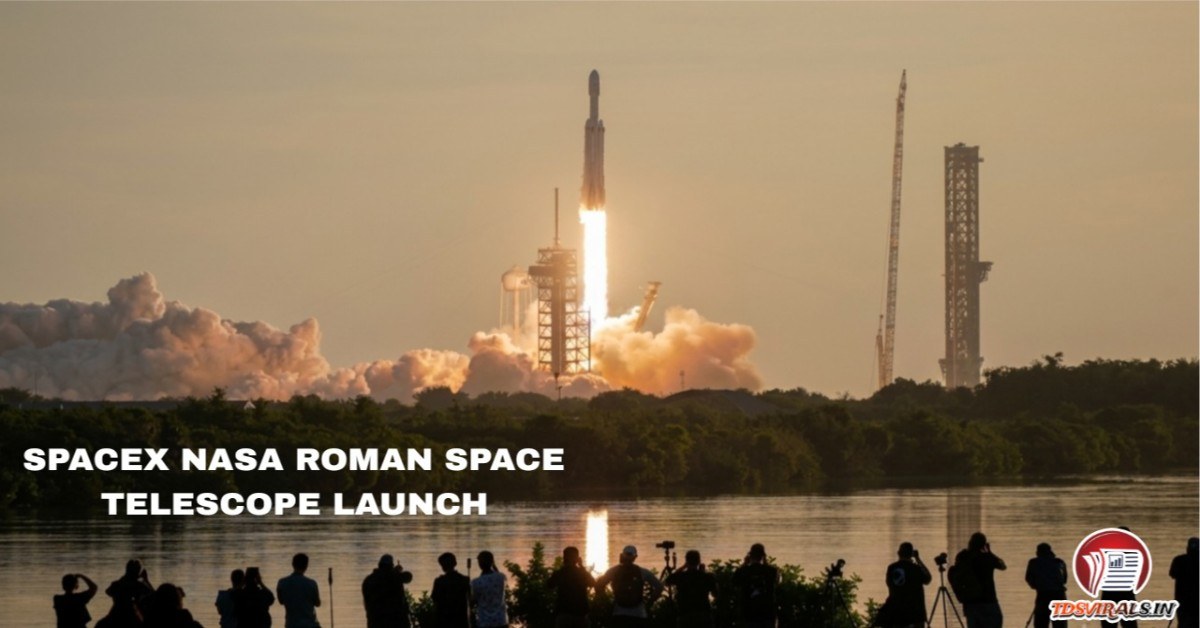

Roman is the fourth primary NASA mission launched aboard a Falcon Heavy rocket. With its ability to rapidly map enormous sections of the sky, study dark energy and dark matter, and investigate distant planetary systems, the Nancy Grace Roman Space Telescope could fundamentally expand humanity’s understanding of the universe.

FAQs-Spacex Nasa Roman Space Telescope Launch About Nancy Grace Roman Space Telescope

1. What is the Nancy Grace Roman Space Telescope?
The Nancy Grace Roman Space Telescope is a NASA space observatory designed to study dark energy, dark matter, exoplanets, galaxies, and the evolution of the universe.

2. When did NASA launch the Roman Space Telescope?
NASA launched Roman on August 30, 2026, aboard a SpaceX Falcon Heavy rocket from Kennedy Space Center in Florida.

3. Where is the Roman Telescope going?
Roman is traveling toward the second Sun-Earth Lagrange point, or L2, approximately one million miles from Earth.

4. What will the Roman Telescope study?
Its major science goals include studying dark matter, dark energy, exoplanets, galaxy formation, and cosmic evolution.

5. When will Roman’s first images be released?
NASA anticipates releasing the telescope’s first images by early 2027 following its commissioning and calibration period.

6. How much data will Roman send to Earth?
NASA expects Roman to transmit approximately 1.4 terabytes of data per day.

7. Is Roman faster than Hubble?
Roman is designed to survey the universe approximately 1,000 times faster than NASA’s Hubble Space Telescope because of its wide field of view and rapid survey capabilities.
Nancy Grace 2026: NASA Sets Launch Coverage for Roman Space Telescope on Aug. 30 From Florida – Latest update USA

Nancy Grace 2026

Nancy Grace 2026 NASA Roman Space Telescope Launch Aug. 30: Time, Rocket, Live Coverage

NASA Roman Space Telescope Launch: NASA has announced coverage plans for the launch of the Nancy Grace Roman Space Telescope, with liftoff targeted for Sunday, August 30, 2026, from Kennedy Space Center in Florida. NASA and SpaceX are targeting the launch for no earlier than 7:26 a.m. EDT on August 30, aboard a SpaceX Falcon Heavy rocket from Launch Complex 39A. Live launch coverage is scheduled to begin at 6:20 a.m. EDT.

Nancy Grace 2026 NASA Roman Space Telescope Launch: What to Know-The Nancy Grace Roman Space Telescope is NASA’s next-generation space observatory. The mission is designed to investigate some of the biggest questions in modern astronomy, including the nature of dark energy and dark matter. The telescope will also conduct a statistical survey of planetary systems and support a wide range of astrophysics research.

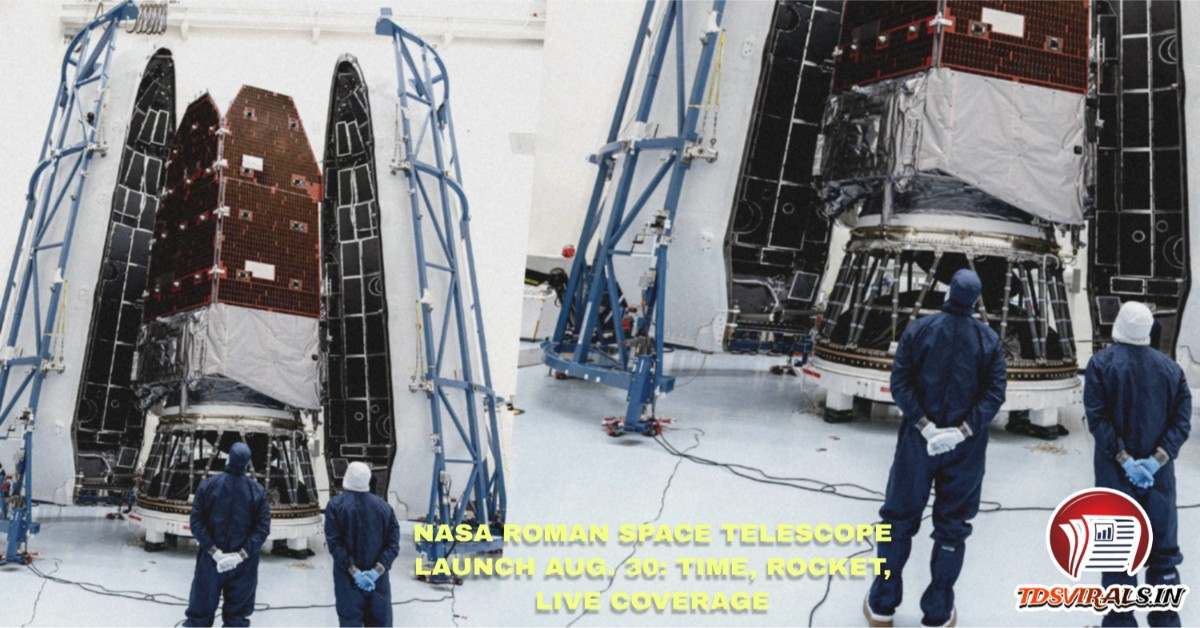
Nancy Grace 2026 update – According to NASA, the spacecraft was encapsulated inside its payload fairing on August 21, 2026, at the Payload Hazardous Servicing Facility at Kennedy Space Center. Encapsulation protects the spacecraft during rollout, launch and the initial stages of its journey into space.

Nancy Grace 2026 SpaceX Falcon Heavy to Launch NASA’s Roman Telescope-NASA has selected SpaceX’s Falcon Heavy to carry the Roman Space Telescope into space. The launch is planned from Launch Complex 39A at NASA’s Kennedy Space Center in Florida. The mission is particularly significant for astronomy because Roman is designed to provide a wide-field view of the universe and collect data that could help scientists better understand cosmic expansion and the evolution of galaxies.

Roman Coronagraph Instrument-Nancy Grace 2026 News The flagship observatory also carries the Roman Coronagraph Instrument, a technology demonstration designed by NASA’s Jet Propulsion Laboratory. The instrument is intended to demonstrate advanced technologies for directly observing planets outside our solar system. The technology could contribute to future missions searching for and studying distant exoplanets.

When and Where to Watch NASA Roman Telescope Launch- NASA and SpaceX are currently targeting the launch for:

  • Date: Sunday, August 30, 2026
  • Target launch time: 7:26 a.m. EDT or later
  • Live coverage begins: 6:20 a.m. EDT
  • Rocket: SpaceX Falcon Heavy
  • Launch site: Launch Complex 39A, Kennedy Space Center, Florida

NASA said live coverage of the prelaunch and launch activities will be available through multiple online platforms.

Nancy Grace 2026 Why the Roman Space Telescope Matters-The Nancy Grace Roman Space Telescope is expected to play an important role in future space science research. Its observations will help scientists study dark energy, dark matter, galaxies, stars and planetary systems.

Nancy Grace 2026
NASA Generate official gov website – Img

The mission is also expected to produce large amounts of astronomical data that researchers can use to investigate how the universe has changed over time.

FAQs-Nancy Grace 2026

Q1. When will NASA’s Roman Space Telescope launch?
NASA and SpaceX are targeting the launch for no earlier than 7:26 a.m. EDT on Sunday, August 30, 2026.

Q2. Which rocket will launch the Roman Space Telescope?
The Nancy Grace Roman Space Telescope is scheduled to launch aboard a SpaceX Falcon Heavy rocket.

Q3. Where will the Roman Space Telescope launch from?
The launch is planned from Launch Complex 39A at NASA’s Kennedy Space Center in Florida.

Q4. What will the Roman Space Telescope study?
Roman will investigate dark energy and dark matter, survey planetary systems and support a broad range of astrophysics research.

Q5. What is the Roman Coronagraph Instrument?
The Roman Coronagraph Instrument is a technology demonstration designed by NASA’s Jet Propulsion Laboratory to advance technologies for observing exoplanets.

Q6. When does NASA’s Roman launch coverage begin?
NASA’s live launch coverage is scheduled to begin at 6:20 a.m. EDT on August 30.

Q7. Why is the Nancy Grace Roman Space Telescope important?
The telescope is designed to provide new observations of the universe and help scientists investigate dark energy, dark matter, galaxies and planetary systems.

Nasa Spacex Moon Crater: SpaceX Falcon 9 Rocket Crashes Into Moon, NASA Reveals New Crater in Before-and-After Images

Nasa Spacex Moon Crater

SpaceX Falcon 9 Crashes Into Moon: NASA Reveals New Crater Images

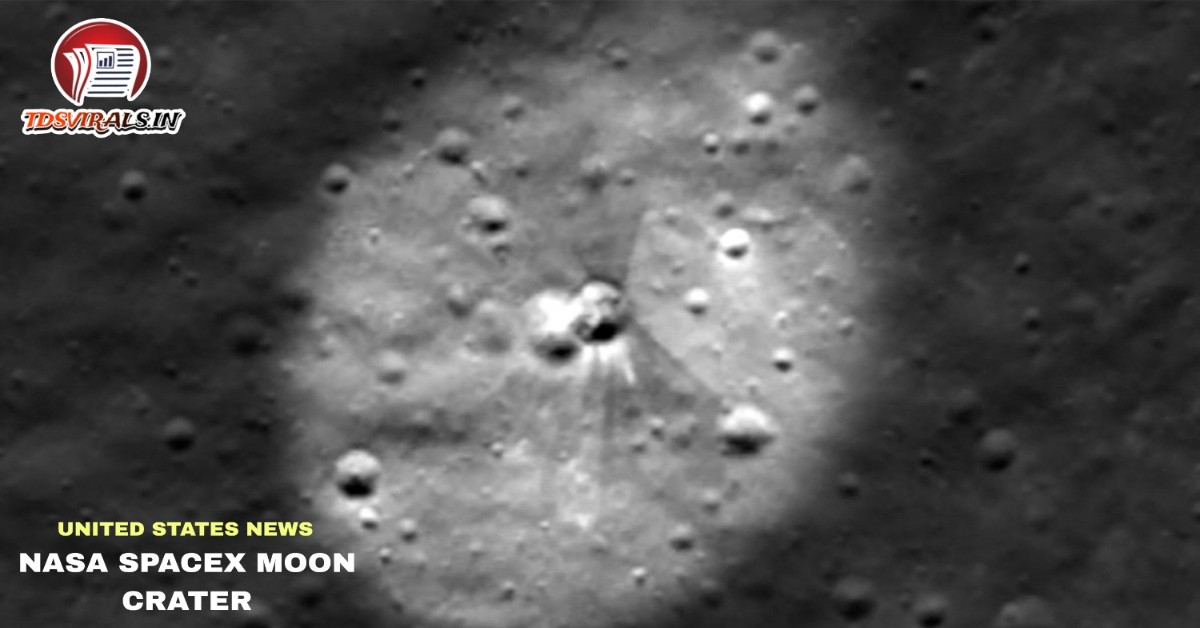
United states News: NASA has released striking before-and-after images showing the location where part of a SpaceX Falcon 9 rocket crashed into the Moon earlier this month. The impact created a new crater on the lunar surface, giving scientists a rare opportunity to study how human-made spacecraft hardware affects the Moon. The images were captured by NASA’s Lunar Reconnaissance Orbiter (LRO) and show the lunar surface before and after the rocket stage struck the Moon.

SpaceX Falcon 9 Rocket Crashes Into Moon-Nasa Spacex Moon Crater Latest update According to NASA, the upper stage of a SpaceX Falcon 9 rocket hit the Moon on August 5 after spending more than a year traveling through space. The rocket stage was moving at approximately 5,400 mph when it slammed into the lunar surface.

Nasa Spacex Moon Crater-The impact was not intentional. However, NASA scientists said that lunar-surface impacts can be an accepted and safe way of disposing of spacecraft hardware when missions reach their end. NASA lunar scientist Kelsey Young explained that deliberately impacting hardware on the lunar surface can sometimes be a predictable and trackable strategy for mission operators.

Nasa Spacex Moon Crater NASA Releases Before-and-After Moon Images – NASA’s Lunar Reconnaissance Orbiter photographed the impact location approximately six days after the crash. The spacecraft was flying about 60 miles above the Moon’s surface when the images were taken.

Nasa Spacex Moon Crater Scientists studying the photographs determined that the newly created crater measures approximately 60 feet across and is less than 10 feet deep. The before-and-after images provide scientists with a clear comparison of the lunar landscape and the changes caused by the rocket impact.

What Does the New Moon Crater Look Like? Nasa Spacex Moon Crater-The NASA images show several bright and dark streaks spreading outward from the newly formed crater. According to NASA, the darker rays consist of lunar dust and rocks that have been altered over long periods by exposure to the solar wind, cosmic rays and micrometeorite impacts.

The brighter streaks are believed to contain material excavated from deeper beneath the lunar surface during the impact. These patterns can help scientists understand how material moves across the Moon after a high-speed collision.

Was the SpaceX Rocket Crash Dangerous? Nasa Spacex Moon Crater News The impact was not considered a threat to people because the Moon has no permanent human population. NASA also said it was not concerned about the accidental lunar impact.

While spacecraft operators generally track the final location of hardware, objects traveling through space can sometimes end their journeys by colliding with planetary or lunar surfaces. Kelsey Young said that impacts on the lunar surface can be considered a technically accepted and safe method of disposing of hardware in low lunar orbit. In some missions, operators may intentionally plan an impact when it provides a predictable way to end a spacecraft’s operational life.

Nasa Spacex Moon Crater Why Is the NASA Moon Image Important? The discovery is scientifically valuable because the crater provides a fresh example of how an object traveling at high speed can modify the lunar surface.

Scientists can compare the newly created feature with older lunar craters to better understand the effects of impacts. The surrounding rays and excavated material may also provide information about the composition of the lunar soil beneath the surface. The Lunar Reconnaissance Orbiter has been studying the Moon for years and has captured detailed images of the lunar landscape, including impact sites, geological formations and locations of interest for future exploration.

Nasa Spacex Moon Crater SpaceX and NASA Lunar Exploration-The incident also highlights the growing amount of human-made hardware traveling through space as governments and private companies expand lunar exploration.

Nasa Spacex Moon Crater
Nasa Spacex Moon Crater today

SpaceX has become a major player in the commercial space industry, while NASA is working on future lunar missions as part of its broader exploration program. As lunar activity increases, spacecraft disposal and collision planning will remain important considerations for mission operators. Nasa Spacex Moon Crater Latest News

  • A SpaceX Falcon 9 upper stage crashed into the Moon on August 5.
  • The rocket stage was traveling at around 5,400 mph.
  • NASA’s Lunar Reconnaissance Orbiter captured images of the impact site.
  • The newly formed crater is approximately 60 feet wide and less than 10 feet deep.
  • NASA said the impact was not intentional.
  • Scientists observed bright and dark rays around the crater.
  • NASA considers lunar-surface impacts an accepted method of disposing of some spacecraft hardware.

FAQs – Nasa Spacex Moon Crater

1.What happened to the SpaceX Falcon 9 rocket?

The upper stage of a Falcon 9 rocket crashed into the Moon on August 5 after spending more than a year in space.

2.How big is the new crater on the Moon?

NASA scientists determined that the crater is approximately 60 feet across and less than 10 feet deep.

3.Did SpaceX intentionally crash the rocket into the Moon?

No. The reported impact was not intentional.

4.How did NASA find the impact crater?

NASA’s Lunar Reconnaissance Orbiter photographed the area approximately six days after the impact.

5.Why are there bright and dark streaks around the crater?

NASA said the streaks are associated with material around the impact site. Brighter rays contain material excavated from deeper underground, while darker rays involve lunar material altered over time by exposure to the space environment.

6.Is crashing spacecraft into the Moon considered safe?

NASA lunar scientist Kelsey Young said lunar-surface impacts can be a technically accepted and safe method of disposing of hardware in low lunar orbit when the impact is predictable and trackable.

7.What is the Lunar Reconnaissance Orbiter?

NASA’s Lunar Reconnaissance Orbiter is a spacecraft that studies and photographs the Moon’s surface from lunar orbit.

8.Why are new lunar craters important to scientists?

Fresh impact sites can help researchers study how collisions modify the Moon’s surface and how material from beneath the surface is distributed around an impact crater.

Solar Eclipse 2026: 12 अगस्त को सूर्य ग्रहण, भारत में दिखेगा या नहीं? जानें समय, सूतक काल और लाइव स्ट्रीम

Solar Eclipse 2026

Solar Eclipse 2026: 12 अगस्त को सूर्य ग्रहण, भारत में दिखेगा या नहीं? जानें समय, सूतक काल और लाइव स्ट्रीम

Solar Eclipse 2026: बुधवार, 12 अगस्त 2026 को इस साल का एकमात्र पूर्ण सूर्य ग्रहण होने जा रहा है। खगोलीय घटना को लेकर दुनियाभर में लोगों की दिलचस्पी बढ़ गई है। हालांकि भारत में रहने वाले लोगों के लिए इस सूर्य ग्रहण को लेकर सबसे महत्वपूर्ण बात यह है कि यह ग्रहण भारत में दिखाई नहीं देगा।

Solar Eclipse 2026 – 12 अगस्त का पूर्ण सूर्य ग्रहण तब होगा जब चंद्रमा पृथ्वी और सूर्य के बीच से गुजरेगा और कुछ समय के लिए सूर्य के प्रकाश को पूरी तरह ढक देगा। पूर्ण ग्रहण की स्थिति दुनिया के कुछ चुनिंदा क्षेत्रों में दिखाई देगी, जबकि कई अन्य इलाकों में आंशिक सूर्य ग्रहण देखा जा सकेगा।

वैश्विक स्तर पर सूर्य ग्रहण की शुरुआत लगभग 3:34 PM UTC पर होगी। ग्रहण का अधिकतम चरण करीब 5:46 PM UTC के आसपास होगा और पूरी घटना लगभग 7:58 PM UTC तक समाप्त हो जाएगी। भारतीय समय यानी IST के अनुसार ग्रहण लगभग 12 अगस्त की रात 9:04 बजे से 13 अगस्त की रात 1:28 बजे तक चलेगा। ग्रहण के दौरान पूर्णता यानी Totality की अधिकतम अवधि करीब 2 मिनट 18 सेकंड रहने की संभावना है।

क्या भारत में दिखाई देगा Solar Eclipse 2026?

नहीं। 12 अगस्त 2026 का सूर्य ग्रहण भारत से दिखाई नहीं देगा।

इसका मुख्य कारण यह है कि जब ग्रहण भारत के समय के अनुसार हो रहा होगा, उस समय भारत में रात होगी और सूर्य क्षितिज के नीचे रहेगा। इसलिए भारत के किसी भी हिस्से से सूर्य ग्रहण का पूर्ण या आंशिक चरण प्रत्यक्ष रूप से नहीं देखा जा सकेगा।यही वजह है कि भारत में लोग इस खगोलीय घटना को आसमान में देखने के बजाय ऑनलाइन लाइव स्ट्रीम के माध्यम से देख सकते हैं।

Solar Eclipse 2026 update – 12 अगस्त 2026 के पूर्ण सूर्य ग्रहण का Path of Totality कई उत्तरी क्षेत्रों से होकर गुजरेगा। इनमें ग्रीनलैंड, आइसलैंड, उत्तरी रूस, स्पेन और पुर्तगाल का एक छोटा हिस्सा शामिल है।

इन क्षेत्रों में कुछ समय के लिए चंद्रमा सूर्य के चमकीले हिस्से को पूरी तरह ढक देगा। इस दौरान सूर्य की बाहरी परत यानी Corona दिखाई देने का अवसर मिलेगा। यूरोप, उत्तरी अमेरिका और उत्तर-पश्चिमी अफ्रीका के कई हिस्सों में सूर्य ग्रहण आंशिक रूप से दिखाई देगा।

पूर्ण सूर्य ग्रहण अपेक्षाकृत दुर्लभ खगोलीय घटनाओं में शामिल है। जब चंद्रमा सूर्य और पृथ्वी के बीच इस तरह आ जाता है कि सूर्य का पूरा चमकीला डिस्क ढक जाता है, तब कुछ समय के लिए दिन के समय अंधेरा जैसा वातावरण बन सकता है। वैज्ञानिकों के लिए भी ऐसे ग्रहण महत्वपूर्ण होते हैं। पूर्ण सूर्य ग्रहण के दौरान सूर्य की बाहरी वायुमंडलीय परत Corona का अध्ययन करने का अवसर मिलता है, जिसे सामान्य परिस्थितियों में सूर्य की अत्यधिक चमक के कारण देखना कठिन होता है।

Solar Eclipse 2026 – भारत में Sutak Kaal कब लगेगा? सूर्य ग्रहण को लेकर भारत में सूतक काल से जुड़े धार्मिक सवाल भी लोगों के बीच चर्चा में हैं। चूंकि 12 अगस्त 2026 का ग्रहण भारत में दिखाई नहीं देगा, इसलिए उन धार्मिक परंपराओं में सूतक काल को लागू नहीं माना जाता जो स्थानीय दृश्यता को इसका आधार मानती हैं। हालांकि सूतक काल धार्मिक और सांस्कृतिक मान्यता है, खगोलीय घटना नहीं। अलग-अलग समुदायों और परंपराओं में इसके नियम और मान्यताएं अलग हो सकती हैं।

Solar Eclipse 2026 को सुरक्षित तरीके से कैसे देखें?

Solar Eclipse 2026 just now – जो लोग ग्रहण के दिखाई देने वाले क्षेत्रों में मौजूद होंगे, उन्हें आंखों की सुरक्षा का विशेष ध्यान रखना चाहिए।आंशिक ग्रहण के दौरान बिना प्रमाणित Solar Eclipse Glasses या उचित Solar Filter के सूर्य को सीधे नहीं देखना चाहिए। सामान्य धूप के चश्मे सूर्य को देखने के लिए पर्याप्त सुरक्षा प्रदान नहीं करते।

पूर्ण ग्रहण के दौरान Totality के कुछ क्षणों में सूर्य का चमकीला भाग पूरी तरह ढक जाता है। लेकिन जैसे ही सूर्य की चमकीली सतह दोबारा दिखाई देने लगे, आंखों की सुरक्षा तुरंत वापस इस्तेमाल करनी चाहिए। भारत में रहने वाले लोग इस ग्रहण को ऑनलाइन लाइव स्ट्रीम के जरिए देख सकते हैं।

Solar Eclipse 2026 12 August Solar Eclipse: भारत के लिए मुख्य बातें

  • तारीख: 12 अगस्त 2026
  • घटना: पूर्ण सूर्य ग्रहण
  • भारत में दृश्यता: नहीं
  • भारत में अनुमानित समय: 12 अगस्त रात से 13 अगस्त देर रात तक
  • अधिकतम Totality: लगभग 2 मिनट 18 सेकंड
  • पूर्ण ग्रहण वाले प्रमुख क्षेत्र: ग्रीनलैंड, आइसलैंड, उत्तरी रूस, स्पेन और पुर्तगाल का कुछ हिस्सा
  • भारत में देखने का विकल्प: ऑनलाइन लाइव स्ट्रीम
  • सुरक्षा: सीधे सूर्य को देखने से बचें और प्रमाणित Solar Viewing उपकरण का इस्तेमाल करें।

FAQ: Solar Eclipse 2026

1. 12 अगस्त 2026 को सूर्य ग्रहण कितने बजे होगा?

भारतीय समय के अनुसार वैश्विक ग्रहण की अवधि लगभग 12 अगस्त रात 9:04 बजे से 13 अगस्त रात 1:28 बजे तक रहेगी।

2. क्या 12 अगस्त 2026 का सूर्य ग्रहण भारत में दिखाई देगा?

नहीं। भारत में उस समय रात होने के कारण सूर्य ग्रहण दिखाई नहीं देगा।

3. 12 अगस्त 2026 के सूर्य ग्रहण का सूतक काल लगेगा?

भारत में ग्रहण दिखाई नहीं देने के कारण उन परंपराओं के अनुसार सूतक काल लागू नहीं माना जाता जो स्थानीय दृश्यता को आधार मानती हैं। धार्मिक मान्यताएं समुदाय के अनुसार अलग हो सकती हैं।

4. 2026 का पूर्ण सूर्य ग्रहण कहां दिखाई देगा?

पूर्ण सूर्य ग्रहण का क्षेत्र ग्रीनलैंड, आइसलैंड, उत्तरी रूस, स्पेन और पुर्तगाल के एक छोटे हिस्से तक फैलेगा।

5. सूर्य ग्रहण को सुरक्षित तरीके से कैसे देखें?

आंशिक ग्रहण के दौरान प्रमाणित Solar Eclipse Glasses या उचित Solar Filter का उपयोग करना चाहिए। सामान्य sunglasses पर्याप्त सुरक्षा नहीं देते।

6. क्या भारत में सूर्य ग्रहण की Live Streaming देख सकते हैं?

हां। भारत में ग्रहण दिखाई नहीं देने के कारण इसे अंतरिक्ष एजेंसियों, वेधशालाओं और अन्य विश्वसनीय ऑनलाइन प्लेटफॉर्म की लाइव स्ट्रीम के जरिए देखा जा सकता है।

7. 2026 के सूर्य ग्रहण की Totality कितनी देर होगी?

अधिकतम Totality लगभग 2 मिनट 18 सेकंड रहने की संभावना है।

Solar Eclipse 2026
Solar Eclipse – Img

Solar Eclipse 2026 – नोट: ग्रहण के समय और दृश्यता के स्थानीय विवरण में स्थान के अनुसार अंतर हो सकता है। लाइव देखने से पहले आधिकारिक खगोलीय स्रोत से स्थानीय समय की पुष्टि करें।