
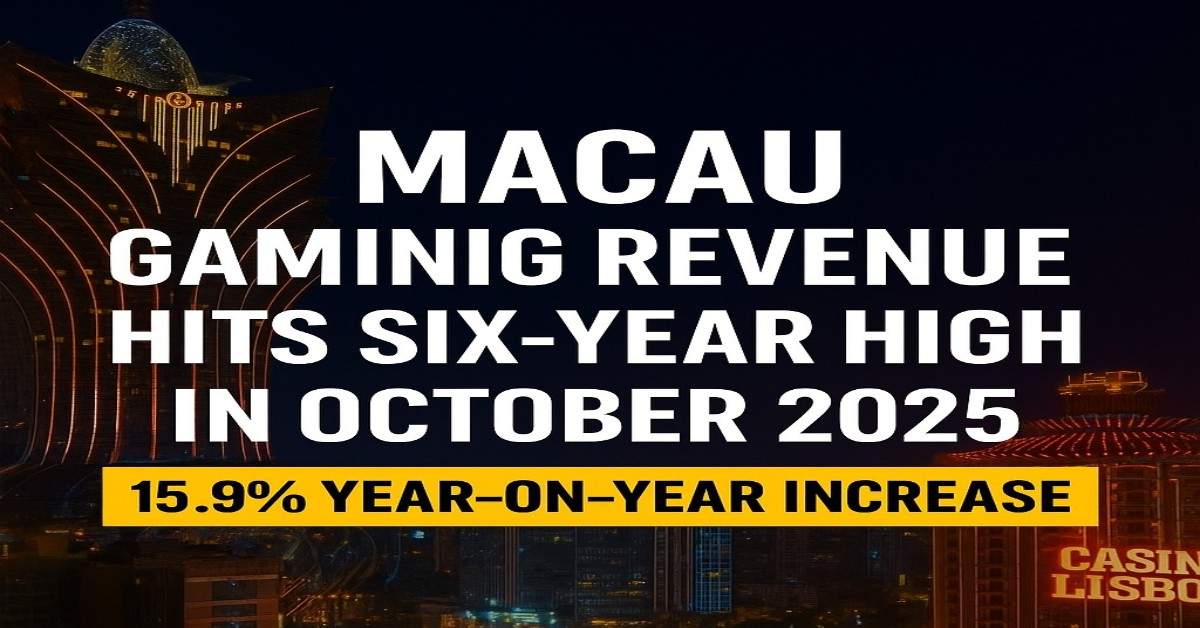
Macau Gaming Revenue Hits Six-Year High in October on Strong Golden Week Footfall
Tds Virals – Macau, – Macau’s gaming industry roared back in October, posting its highest monthly gross gaming revenue (GGR) in six years as a record-breaking National Day Golden Week fueled a surge in mass-market demand that outweighed mid-month weather disruptions.
October Revenue Climbs to ~MOP 24.1 Billion – Macau Gaming Revenue | Macau’s casino operators announced that October’s gross gaming revenue reached approximately MOP 24.1 billion (around US $3.0 billion), representing a 15–16% year-on-year increase and marking the strongest monthly performance since 2019. This result exceeded market expectations and reset the recovery baseline to a new, higher run-rate.
The rebound signals that Macau is no longer reliant solely on VIP play. Instead, a growing mix of mass-market and premium-mass segments is driving volume, as well as contributing to more stable margins and reduced credit risk.
Golden Week Visitor Surge Sets Records | Macau Gaming Revenue – A key catalyst was the Golden Week National Day holiday at the start of October. Over the eight-day period, Macau recorded back-to-back single-day arrival records, with weekend entries topping 180,000–190,000 arrivals per day. Hotel occupancy climbed to near 88 percent during the peak holiday period.
That visitor surge followed a record-breaking summer: August alone attracted more than 4.2 million visitors to Macau, underlining that tourism demand is broadening beyond high-roller clientele into day-trippers, families, and short-stay leisure visitors.
The strength of Golden Week suggests that the recovery now rests on a broader tourism engine — not just VIP gamblers but mass-market travellers, retail shoppers, dining visitors, and families.
Macau Gaming Revenue – Weather Wobble, But Quick Recovery – Mid-October brought a brief challenge. A strengthening typhoon skirted the Pearl River Delta, triggering transport warnings and temporarily reducing footfall and table volumes in Macau. However, once those weather warnings eased, visitation and gaming activity rebounded quickly.
Despite the temporary slowdown, October still outperformed earlier forecasts, underlining resilience in Macau’s tourism base. That resilience helps illustrate that even short-term external shocks such as tropical weather disruptions have less impact than in previous years.
What MOP 24 Billion Means for the Run-Rate – Reaching roughly MOP 24.1 billion in October implies that Macau’s monthly gaming revenue “floor” has shifted upward. Earlier in the year, monthly GGR had floated in the MOP 18–21 billion band during non-peak periods. October’s result suggests that during future peak periods, operators can expect higher levels of revenue than before — tightening the path toward annual targets.
To put it another way, the rebound is no longer a simple return to pre-COVID levels. Instead, Macau appears to have reset its baseline, raising expectations for the full year and accelerating the industry’s recovery trajectory.

Mix Shift: Mass-Market Growth Reduces Reliance on VIP – One of the most important changes underlining October’s strong performance is the ongoing shift in gaming mix. Mass-market and premium-mass segments contributed more heavily to revenue than legacy VIP play.
That shift is beneficial for margins: mass-market gaming typically involves steadier “hold” rates and lower credit risk compared to VIP junket-style programs. As Macau’s operators lean less on high-risk credit-based VIP volumes, they can stabilize earnings and reduce exposure to the volatility that marked earlier phases of the recovery.
Macau Gaming Revenue In short: premium mass is now the earnings engine, while VIP volumes remain active but structurally smaller than pre-2020 levels. Many operators appear to welcome that tradeoff.
Diversification Spillovers: Non-Gaming Appeal Strengthens – October’s strong performance also speaks to ongoing progress in Macau’s non-gaming diversification strategy. Dining, shopping, entertainment, and shows are increasingly drawing first-time and family visitors, helping to convert day-trip footfall into overnights and lengthen stays.
Local authorities and concessionaires remain focused on expanding non-gaming pillars—such as MICE (meetings, incentives, conferences, and exhibitions), culture, sports, wellness, nightlife, and retail. Billions of patacas are earmarked for events infrastructure and upgraded facilities through the rest of the decade.
That shift matters not just for headline attendance, but for sustainable economic impact: when tourists stay overnight, dine out, attend concerts, and shop, Macau’s hotels and retail sectors benefit alongside gaming operators.
Fiscal Floor Pressure: Sustainability Over Spikes | Macau’s government has publicly warned that monthly GGR must remain comfortably above MOP 15 billion to avoid fiscal strain. That benchmark underlines why maintaining consistent mass-market volumes and smoothing demand between Golden Week, Lunar New Year, and summer peaks is essential for long-term viability.
Holiday-driven spikes such as Golden Week are welcome, but they must be backed by year-round demand to cushion against seasonality, economic slowdowns, or weather-related disruptions.
Year-to-Date Trends & Forward Outlook – So far in 2025, Macau has posted mid-single- to high-single-digit year-on-year growth compared to the same period in 2024. After a modest lull in September, October’s rebound resets momentum going into the winter season.


Macau Gaming Revenue – Visitor arrivals during the first nine months showed double-digit gains, though the average stay remains relatively short (around 1.1 days). That underlines the importance of converting more same-day visitors into overnight guests, boosting per-visitor spend and lengthening dwell time.
To that end, operators continue to invest capital expenditures in upgraded floor layouts, enhanced transport links, and mid-luxury retail and family-friendly amenities. These enhancements aim to lift “time-on-property” and encourage longer stays.
Winter Strategy: Festivals, MICE & Events to Fill the Gaps – With October’s strong rebound behind it, Macau is now preparing for the winter period, traditionally a slower stretch between Lunar New Year and the summer season. The next test will be sustaining demand via festivals, concerts, regional sporting events, and non-gaming attractions.
If operators can build an events calendar that smooths seasonal dips, they may stabilize revenue through the winter and set the stage for another peak during Lunar New Year.
Macau Gaming Revenue – At the same time, macroeconomic factors – including mainland China growth, consumer sentiment, and currency volatility—could impact discretionary spending in premium tiers. Weather seasonality remains another variable, especially late-season storms.
Bottom Line Macau Gaming Revenue – October’s six-year high in Macau gaming revenue demonstrates that Macau’s recovery is no longer just a summer story. Even with weather disruptions, the world’s largest casino market is hitting pre-pandemic-style peaks again but this time on broader tourism foundations, not solely VIP volumes.
Macau Gaming Revenue – With Golden Week momentum translating into stronger monthly run-rates, operators and regulators alike are now focused on sustaining mass-market growth, expanding non-gaming infrastructure, and smoothing out seasonal demand through strategic events.
Macau Gaming Revenue
If Macau can hold monthly GGR comfortably above the fiscal floor (MOP 15 billion), while growing non-gaming amenities and extending visitor stays, the city could be well on its way to a more resilient and diversified post-COVID growth model.











 Home
Home
 Facebook
 Twitter
 Instagram
 Call
Call
 WhatsApp