
Says UK Had ‘No Role’ in US-Israeli Strikes on Iran as Region Braces for Escalation
Starmer uk Iran
Tds Virals Update Starmer uk Iran Mrach 2026: British Prime Minister Keir Starmer has confirmed that the United Kingdom played “no role” in the joint US-Israeli airstrikes that killed Iran’s Supreme Leader, Ayatollah Ali Khamenei, as tensions spiral across the Middle East.
Starmer uk Iran – In a televised address and subsequent diplomatic calls with regional leaders, Starmer stressed the urgent need to prevent further escalation, warning that Iranian retaliation poses a serious threat to regional stability, global trade routes, and British personnel stationed overseas.
The statement comes as Iran vows its “most intense operation ever” in response to the killing of its long-time leader, triggering missile and drone attacks across several Gulf states.
UK Distances Itself from the Strikes / Starmer uk Iran Downing Street was unequivocal: Britain did not participate in the military action carried out by the United States and Israel.
Starmer emphasized that while the UK shares concerns about Iran’s nuclear ambitions and regional activities, it was not involved operationally in the strikes that targeted Tehran and other strategic locations.
The Prime Minister said Britain’s priority remains:
- Protecting British nationals abroad
- Ensuring the safety of UK military personnel
- Preventing a broader regional war
- Supporting diplomatic solutions
However, the UK has deployed aircraft on defensive missions from bases in Cyprus and Qatar, intercepting drones and missiles that threatened British forces and allied installations.
Iran’s Retaliation Intensifies Following the death of Ayatollah Ali Khamenei, who had ruled Iran for nearly four decades, Tehran launched missile and drone strikes across the Gulf region.
Explosions were reported in multiple states, and two vessels in the strategically vital Strait of Hormuz were allegedly struck by unknown projectiles.
The shipping lane handles a significant percentage of global oil exports, raising fears of economic disruption.
Iran’s parliamentary speaker, Mohammad Bagher Qalibaf, pledged “devastating blows” in response. Meanwhile, US President Donald Trump warned Tehran that the United States would respond with unprecedented force if attacks continue.
The Israeli military also confirmed further air operations aimed at securing “aerial superiority” over Tehran.
Threat to British Forces UK Defence Secretary John Healey revealed that Iranian missiles and drones landed within a few hundred yards of approximately 300 British troops stationed in Bahrain.

Additionally:
- Missiles were fired toward Cyprus, where thousands of UK personnel are based.
- A British counter-drone unit in northern Iraq reportedly shot down Iranian drones.
- RAF aircraft conducted defensive operations to neutralize aerial threats.
Healey clarified that while Cyprus was not believed to be a direct target, the incidents highlight what he described as a “very real and rising threat.”
Despite repeated questioning, the Defence Secretary declined to state whether the UK supported the legality of the US-Israeli strike, saying it was “for the US to set out the legal basis of the action.”
Diplomatic Outreach to Gulf Leaders Starmer held urgent discussions with the kings of Jordan and Bahrain, as well as the crown prince of Kuwait.
According to Downing Street, the Prime Minister expressed “solidarity in the face of dangerous Iranian escalation.”
He also raised concerns about:
- Attacks on civilian infrastructure
- Risks to international shipping
- Safety of expatriate communities
- The need to prevent further regional destabilization
The UK, alongside France and Germany, has called on Tehran to return to negotiations over its nuclear program.
Political Reaction at Home The Government’s cautious tone has drawn criticism from both ends of the political spectrum.
Green Party co-leader Zack Polanski described the strikes as “illegal and unprovoked,” arguing that the UK should condemn the action more explicitly.
Conversely, Conservative shadow foreign secretary Dame Priti Patel questioned whether Britain should have taken a stronger stance in support of the US, asking whether American forces sought access to British military bases such as Diego Garcia.
Reports suggest that the UK had previously warned against the use of British facilities for pre-emptive military action.
Global Implications Starmer uk Iran The death of Iran’s Supreme Leader has introduced significant uncertainty into the region’s political future.

Key concerns include:
- Leadership transition in Tehran
- Potential hardline consolidation of power
- Escalation into direct US-Iran conflict
- Disruption of oil markets
- Broader NATO involvement
The Strait of Hormuz remains a focal point for global markets. Any sustained disruption could drive oil prices sharply higher and impact international supply chains.
Analysts warn that while neither Washington nor Tehran may seek full-scale war, miscalculation or accidental escalation remains a serious risk.
UK’s Strategic Position Starmer uk Iran Britain appears to be walking a careful diplomatic line:
- Supporting allies’ objective of preventing Iran from acquiring nuclear weapons
- Avoiding direct military entanglement
- Maintaining regional defence commitments
- Advocating de-escalation
Starmer reiterated that “Iran must never have a nuclear weapon,” aligning the UK with Western strategic goals. However, his government has avoided explicitly endorsing the strike that killed Khamenei.
This approach reflects Britain’s attempt to maintain credibility as both a NATO ally and a diplomatic actor capable of engaging regional partners.
What Happens Next? Several critical developments are expected in the coming days:
- Iran’s next phase of retaliation
- Possible cyber operations targeting Western infrastructure
- Emergency UN Security Council discussions
- Increased military deployments across the Gulf
- Diplomatic efforts by European leaders
The situation remains fluid, with intelligence assessments indicating elevated alert levels across US, Israeli, and UK installations in the Middle Easy.
Conclusion Starmer uk Iran
Starmer uk Iran – Prime Minister Keir Starmer’s clear declaration that the UK had no operational role in the US-Israeli strikes against Iran signals a deliberate effort to avoid direct confrontation while reinforcing Britain’s defensive commitments.
Starmer uk Iran | As missile exchanges intensify and diplomatic tensions mount, the coming days will be critical in determining whether the crisis spirals into a wider conflict or stabilizes through international mediation.
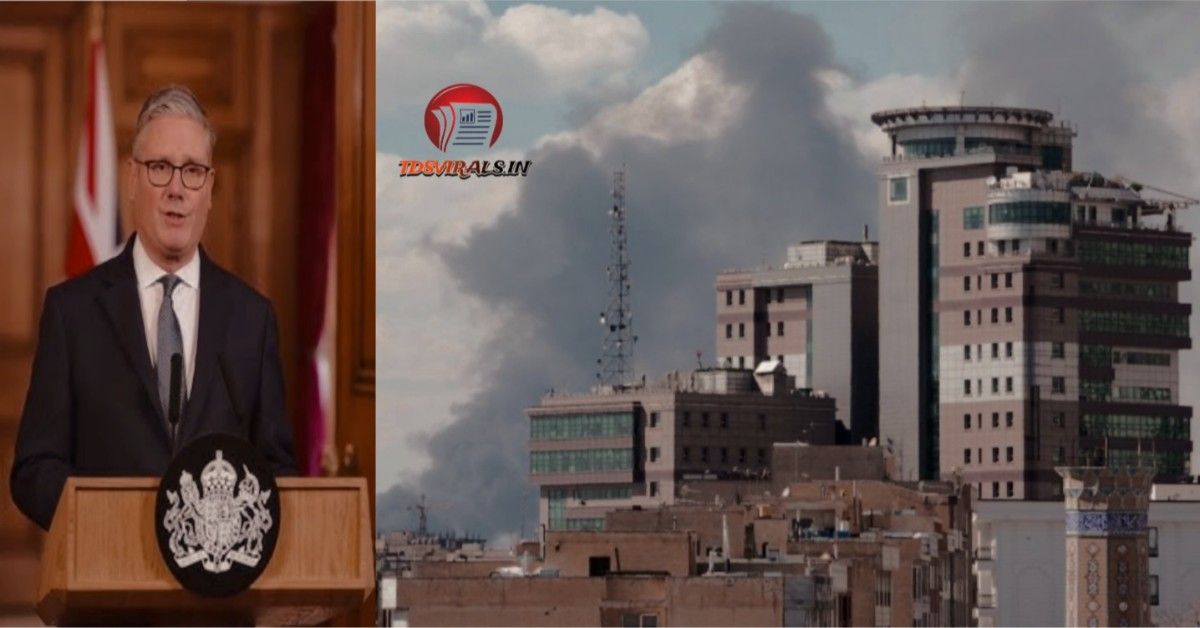
Starmer uk Iran | For now, Britain remains in a defensive posture supporting regional allies, safeguarding its forces, and urging all sides to step back from the brink.








 Home
Home
 Facebook
 Twitter
 Instagram
 Call
Call
 WhatsApp